Bonds: Basics, How They Work, and Investing

Introduction: Why Bonds are the Bedrock of Global Finance
To the uninitiated, the bond market can seem like a dense thicket of jargon—yields, duration, coupon, and spreads. However, at its heart, understanding bond mechanics is one of the most straightforward tasks in the financial world. A bond is a loan concept; while a stock represents an ownership stake in a company’s future, a bond represents a contractual obligation to be repaid.
An investment in fixed income matters because it provides the "circulatory system" for the global economy. Governments and a bond issuer use these tools to build bridges; companies issue bonds to fund innovation. For the investor, bonds serve as a critical tool for capital preservation, income generation, and investment portfolio diversification. By the end of this guide, you will understand how these instruments move and how to evaluate them with the eye of a professional analyst.
Article Outline: The Mechanics of Fixed Income
- Understanding Bond Basics: Why a Bond is a Loan
- Bond Works: How the Instrument Performs Over the Life of the Bond
- Exploring Different Types of Bonds: Government, Municipal Bond, and Agency Bonds
- What is a Corporate Bond and How Does the Coupon Rate Work?
- Bond Price Dynamics: Why Bond Prices and Interest Rates Move in Opposite Directions
- The Role of Coupon vs. Yield to Maturity
- Buying a Bond on the Secondary Market: Market Value and Market Price
- Measuring Risk: Duration and Interest Rate Fluctuations
- Credit Rating and Investment Grade: Evaluating a Bond Issuer
- Building an Investment Portfolio: Bond Fund vs. Individual Bonds
1. Understanding Bond Basics: Why a Bond is a Loan
In the simplest terms, a bond is a loan made by an investor to a borrower. When you buy bonds, you are acting as the bank. The borrower, or bond issuer, could be a national government, a local municipality, or a multinational corporation. In exchange for your capital, the issuer promises to pay a set rate of interest and return the face value of the bond on a specific date.
Unlike a stock, which gives you a "slice of the pie," a bond gives you a "claim on the cash." You don't own the company; you are its creditor. This distinction is vital for any investment strategy because it changes your relationship with the entity you are funding. As a creditor, you have a legal contract—the bond indenture—that dictates exactly when and how you will be paid.
2. Bond Works: How the Instrument Performs Over the Life of the Bond
To understand how a bond works, you must look at its three distinct phases: issuance, the holding period, and maturity. When a bond is issued, it is typically sold at its par value. During the life of the bond, the issuer makes regular interest payments to the bond owner. These are known as coupons, historically named after physical paper coupons investors would clip to receive payment.
Finally, the bond matures. This is the "finish line" where the issuer is legally required to pay back the face value of a bond to the investor. If you hold a bond from the day it is issued until it matures, your return on a bond is generally predictable. However, if you sell the bond to another investor bond before it matures, the bond price may be higher or lower than what you originally paid, depending on the current bond market environment.
3. Exploring Different Types of Bonds: Government, Municipal, and Agency Bonds
When you decide to invest in bonds, you will encounter several main types of bonds. Government bonds (sovereign debt) are generally considered the "low-risk" anchor of an investment portfolio because a government can use its taxing power to repay debt.
Beyond treasuries, municipal bonds are issued by states or cities, and the interest on these bonds is exempt from federal taxes. Agency bonds are issued by government-sponsored entities to support specific sectors like housing. While bonds are typically less volatile than a stock, each type of bond carries unique tax implications and risk profiles. Some investors even diversify by looking at bonds issued by foreign governments to hedge against domestic economic cycles.
4. What is a Corporate Bond and How Does the Coupon Rate Work?
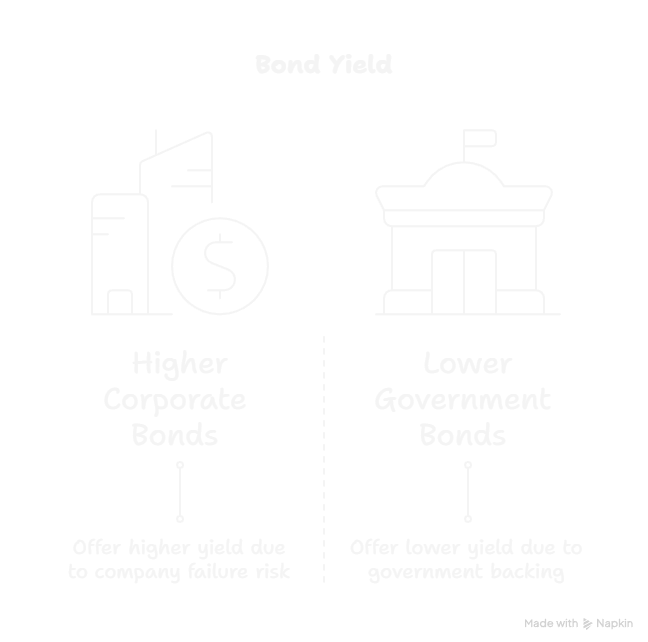
Corporate bonds are issued by companies to fund business operations or issue corporate bonds to raise capital for mergers. Because a company might fail, a corporate bond typically offers a higher bond yield than government bonds. The coupon rate is the fixed annual interest rate the issuer agrees to pay. For example, a bond with a $1,000 par value and a 5% coupon rate will pay $50 in interest every year.
Most bonds pay these installments semi-annually. A technical detail to remember is accrued interest; if you trade a bond between coupon payment dates, the buyer must pay the seller for the interest earned during that partial period. Some specialized instruments, like a zero-coupon bond, don't pay regular interest but are instead sold at a discount and appreciate to their full face value over time.
5. Bond Price Dynamics: Why Bond Prices and Interest Rates Move in Opposite Directions
This is the most famous rule in the bond market: when bond rates (market interest rates) go up, existing bond prices go down. Think of it as a see-saw. If you hold a bond paying 3% interest and new bonds are being issued at 5%, your 3% bond is suddenly less attractive. No one will buy a bond from you at full price if they can get a better deal elsewhere.
Conversely, if interest rates fall, your existing bond becomes a "hot commodity," and the price of a bond will rise. This inverse relationship between bond prices and interest rates is why bonds are often referred to as having interest rate risk. For active bond investors, these price swings represent the primary source of capital gains or losses in the secondary market.

6. The Role of Coupon vs. Yield to Maturity
While the coupon is fixed at issuance, the bond yield is dynamic. The most important metric for an investment is the Yield to Maturity (YTM). YTM is a calculation of the total return you can expect if you buy a bond on the secondary market at its current market price and hold it until the end.
If you buy a bond at a discount, your YTM will be higher than the coupon rate. If you buy at a premium, your YTM will be lower. When professionals discuss the value of a bond, they are almost always looking at YTM, as it reflects the true economic reality of the investment today, including any potential gain or loss from the market value of a bond relative to its par value.
7. Buying a Bond on the Secondary Market: Market Value and Market Price
Most investors don't buy directly from the issuer; they buy a bond on the secondary market. Here, the market price fluctuates daily based on supply, demand, and economic data. The value of a bond in this market is determined by the "present value" of all its future cash flows.
In this market, you may encounter callable bonds. An issuer will call a bond if interest rates drop, allowing them to refinance their debt at a lower cost. If you own callable bonds, you face "reinvestment risk," meaning you might have to take your returned principal and reinvest it at lower current rates.
8. Measuring Risk: Duration and Interest Rate Fluctuations
Duration is a tool used to measure how sensitive an investment is to interest rate changes. It is a "volatility score" expressed in years. If a bond has a duration of 7, a 1% increase in rates will cause the bond price to fall by approximately 7%.
Bonds typically have higher duration if they are long-term bonds or have low coupons. Conversely, a short-term bond or intermediate-term bonds usually have lower duration. Understanding this helps bond investors protect their investment portfolio from sudden market shifts. Though bonds are generally stable, duration is the key to managing potential price turbulence.
9. Credit Rating and Investment Grade: Evaluating a Bond Issuer
When you lend money, there is always a risk the bond issuer will fail to pay you back. To navigate this, agencies provide a credit rating. Bonds rated "AAA" to "BBB-" are considered investment grade. These bonds are generally issued by stable entities with a high likelihood of meeting obligations.
Bonds with lower ratings are known as high-yield bonds or junk bonds. These bonds typically offer a much higher interest rate to compensate for the "default risk." While bonds are considered safer than a stock, a junk bonds investment can be just as volatile. Monitoring a company’s credit rating is vital, as a downgrade can cause the market value of a bond to drop instantly.
10. Building an Investment Portfolio: Bond Fund vs. Individual Bonds
There are two main way to invest in bonds. You can buy individual bonds, which allows you to lock in a specific coupon and maturity date. Alternatively, you can buy into a bond mutual fund or a bond fund (ETF).
A mutual fund or bond fund provides instant diversification across hundreds of different bond types. While individual bonds return your principal at a set date, a portfolio of bonds in a fund has no fixed maturity, as the manager is constantly buying and selling. For many, bonds can help balance the volatility of a stock heavy investment portfolio, providing a "buffer" during market downturns.
Summary: Key Takeaways for the Strategic Investor
- Bonds Represent a Debt: Unlike a stock, a bond is a legal contract ensuring you are a creditor.
- Bonds Tend to be Inverse to Rates: When interest rates rise, bond prices fall.
- Secondary Market Liquidity: Most trading happens after the bond is issued, where market price varies.
- Bonds Offer Stability: Use a bond fund or individual bonds to provide predictable income.
- Credit Rating Matters: Investment grade bonds provide safety, while high-yield bonds offer higher returns for higher risk.
- Bonds Are Often the Anchor: In a diversified investment portfolio, bonds are considered the primary tool for risk mitigation
FAQ
What is a bond to maturity?
A bond to maturity refers to a debt security that an investor holds until its scheduled maturity date, at which point the issuer repays the bond’s face value (principal). During the holding period, the investor typically receives periodic interest payments (coupon payments). Holding a bond to maturity removes reinvestment and market price risk if the issuer does not default.
How does the concept of bond to maturity affect interest payments?
If you intend to keep a bond to maturity, the expected stream of coupon payments becomes predictable: you will receive the stated coupons at the scheduled intervals and the principal at maturity, barring issuer default. The timing and amount of those payments are fixed by the bond’s terms, so your cash flow planning is straightforward compared with trading bonds before maturity.
Why might an investor choose to hold a bond to maturity?
Investors often hold a bond to maturity to secure predictable income and to avoid the price volatility that affects bonds on the secondary market. Holding to maturity can be appealing for conservative investors seeking principal return and reliable interest, or for matching liabilities where the maturity date aligns with a future financial obligation.
What risks remain when you hold a bond to maturity?
While holding a bond to maturity removes market price risk, it does not eliminate credit/default risk—if the issuer defaults you may not receive all payments. There is also reinvestment risk: coupon payments received before maturity may have to be reinvested at lower rates. Inflation risk can erode the real value of fixed coupon payments over time.
How is yield determined if you plan to hold a bond to maturity?
When holding a bond to maturity, the most relevant yield measure is yield to maturity (YTM), which estimates the annualized return assuming all coupons are reinvested at the same rate and the bond is held to its maturity date. YTM incorporates current price, coupons, face value, and time remaining until maturity.
Can you sell a bond before its maturity if you planned a bond to maturity strategy?
Yes, you can sell a bond before maturity on the secondary market, but doing so converts a buy-and-hold plan into a trading decision and exposes you to market price fluctuations. Selling early might yield a profit or loss depending on interest rate movements and credit perception since purchase.
How do interest rate changes affect someone holding a bond to maturity?
Interest rate changes will affect the market price of your bond, but if you hold the bond to maturity and the issuer does not default, those price changes are irrelevant to the ultimate principal repayment and total coupon stream you will receive. However, if you need to sell before maturity, rising rates generally decrease bond prices and vice versa.
What tax considerations apply when you hold a bond to maturity?
Tax treatment depends on bond type and jurisdiction. Generally, coupon interest is taxable as ordinary income in the year received, while gains or losses realized from selling a bond before maturity can be taxed as capital gains or losses. Some bonds (e.g., certain government or tax-exempt bonds) have special tax treatment, so check local tax rules..
Invest in bonds: What is a bond and how does it work?
A bond is a debt security issued by governments, municipalities, or companies to raise money; when you buy bonds you are lending money to the issuer in exchange for periodic interest payments and the return of principal when the bond matures. A bond generally has a face value (also called par value), a coupon rate that determines interest payments, and a maturity date when the bond issuer repays the principal. Bonds that are backed by government credit are seen as safer, while companies issue corporate bonds that typically offer higher yields than government bonds but come with greater credit risk.
Municipal bond: Why do municipalities sell a bond and how are they different?
Municipal bonds are issued by cities, states, and other local government entities to fund public projects. These bonds are often tax-exempt at the federal level and sometimes at the state level, which can make their after-tax yield attractive even if the nominal yield is lower than corporate bonds. Municipal bonds may be general obligation bonds backed by taxing power or revenue bonds backed by specific project income, and bonds are sold in both retail and institutional markets.
Bond market: What affects bond prices and bond yield in the bond market?
Bond prices and bond yield are influenced by interest rate changes, inflation expectations, credit risk of the issuer, and supply and demand in the bond market. When interest rates rise, existing bond prices usually fall because newer issues offer higher coupons, and bond when interest rates drop, existing bond prices generally rise. Bond yield measures the return on a bond and can be quoted as current yield or yield to maturity, which accounts for coupon payments and any discount or premium to face value.
Bond yield: What happens to a bond when interest rates change and should I sell a bond?
If interest rates rise after you buy a bond, the market value of that bond typically falls, and if rates fall, the bond price generally rises; however, if you hold the bond through to its maturity, you will still receive the bond’s face value and periodic interest payments regardless of interim price moves. You may decide to sell a bond if you need liquidity, to lock in gains, or because your investment outlook has changed, but selling a bond before maturity can result in a price higher or lower than the price at which the bond is purchased.
Invest in bonds: What is the difference between stocks and bonds and when should I use bonds?
Stocks represent ownership equity in a company and typically offer potential for capital appreciation and dividends, while bonds are loans that pay interest and return principal at maturity and generally provide more predictable income. You might use bonds to diversify a portfolio, reduce volatility, preserve capital, or generate steady income. Companies issue corporate bonds to finance operations or projects, and investors balance holdings of stocks and bonds depending on risk tolerance and financial goals.
Buy bonds: What does it mean for a bond to mature and what happens when the bond is purchased to maturity?
A bond’s maturity is the date when the bond issuer must repay the bond with a face value payment to the bondholder. If you hold a bond through to its maturity, you will receive the face value and the final interest payment, assuming the issuer does not default. Some bonds may mature earlier or have call provisions allowing the issuer to repay sooner; bonds that are backed by strong credits are less likely to default and more likely to repay principal at maturity.
Bond market: Are there risks with bonds and what should I know about bonds that are backed or higher than government bonds?
Bonds carry risks including interest rate risk, credit risk, inflation risk, and liquidity risk. Bonds that are backed by the full faith and credit of a government are typically safer, whereas corporate bonds and certain municipal bonds often offer yields higher than government bonds to compensate for higher risk. Before investing, check the bond issuer’s credit rating, whether bonds are sold with protections or covenants, and whether an issuer may default when the bonds mature and the bond issuer is required to repay principal.